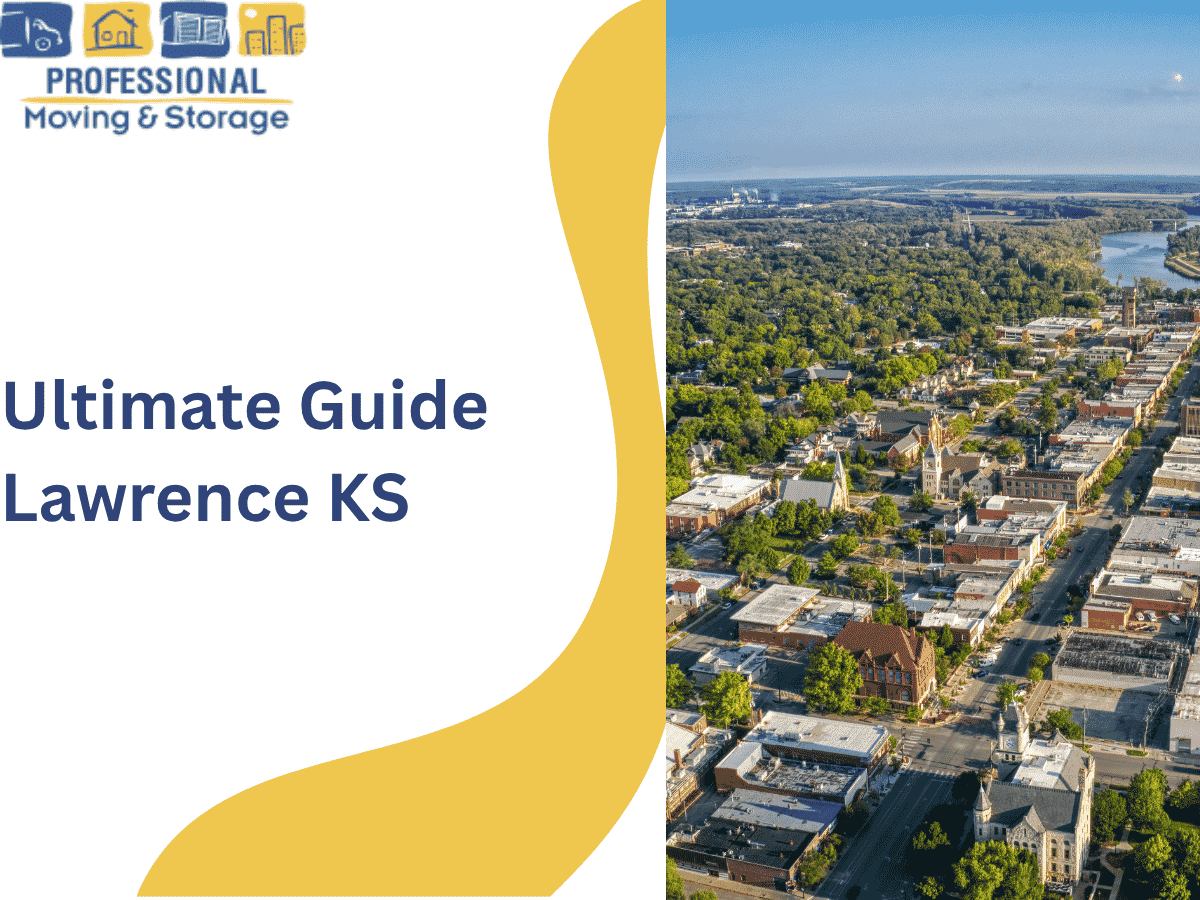
If you are thinking about moving to Lawrence, whether for a job at KU, a house with a yard, or just a change from Kansas City, there are a handful of things worth knowing before you sign anything. Lawrence is a college town of about 95,000 people sitting 40 miles west of Kansas City on I-70, and it does not behave like the Johnson County suburbs an hour east. Rent spikes in August. Massachusetts Street is the center of everything. Winter is short but genuinely cold.
We have been moving families in and out of Lawrence for over 20 years, from our office on Thomas Court. We have carried furniture up the narrow staircases in the old houses near campus and into new builds out west near the Rock Chalk Park. This guide pulls together what we have learned: what it costs, where to live, what the schools and job market look like, and what to plan around.
Overview of Lawrence KS
| Metric | Figure |
|---|---|
| Population | About 94,900 |
| Distance to Kansas City | 40 miles east on I-70 |
| Median home value | $273,000 to $331,000 |
| Median rent | $886 to $999 |
| Median household income | $63,000 to $65,000 |
| Cost of living | 5% to 13% below national average |
| School district | Lawrence USD 497 |
| Universities | University of Kansas, Haskell Indian Nations University |
Sources differ on home values because they measure differently. U.S. News puts the median at $273,295 while HomeSnacks and Forbes land closer to $331,000. The honest answer is that a typical Lawrence house trades somewhere in the high $200s to low $330s depending on the neighborhood and the month.
What It Costs to Live in Lawrence
Lawrence is cheaper than the national average but not the cheapest place in Kansas. HomeSnacks ranks it 49th most affordable out of 64 Kansas cities, which surprises people who assume a college town is automatically cheap. Student demand keeps rental prices firmer than you would expect for a city this size.
Salary.com puts monthly costs at roughly $2,358 for a single person and $5,191 for a family of four, calling the city about 5 percent below the national average. ERI's calculation is more generous at 13 percent below. Both agree the direction is favorable.
Rent. A one-bedroom near downtown runs around $1,188 a month, while the same unit outside the center drops to about $924. Three-bedroom apartments range from roughly $1,686 in the suburbs to $1,919 downtown.
Utilities. Basic service for an average apartment runs around $270 a month. Kansas electricity sits about 16 percent below the national average, which helps in July and January alike.
Groceries. Kansas eliminated its state grocery tax, which is a real and often overlooked saving for families.
We break the full picture down in our guide to the cost of living in Lawrence, and if you are comparing Lawrence against the Johnson County side of the metro, our Lenexa vs Lawrence comparison puts them head to head.
Where to Live in Lawrence
Lawrence is small enough to cross in 15 minutes but varied enough that the neighborhood matters a lot.
Old West Lawrence holds the city's Victorian housing stock, walkable to downtown and full of character. Prices reflect that.
Oread, the area immediately around KU, is dominated by student rentals. Great if you want to walk to campus, noisy if you are raising a family.
West Lawrence is where most of the newer construction sits, with bigger lots, newer schools, and an easy shot out to the K-10 corridor toward Johnson County.
North Lawrence, across the river, is quieter and more affordable, though it sits in a floodplain in places, so check the flood zone status on any address.
East Lawrence has become one of the more interesting parts of town, a mix of older homes, artists, and small businesses within walking distance of Massachusetts Street.
Our full breakdown of the best neighborhoods in Lawrence goes deeper on each area with pricing.
Pro Tip From Our Crew
If you are renting, be aware that Lawrence leases are heavily tied to the KU calendar. Inventory opens up in late spring for August move-in, and the good units go fast. Looking for a rental in June or July is difficult.
Jobs and the Economy
The University of Kansas is the anchor. KU hit a record enrollment of 31,169 students in Fall 2025, and between the university, the KU Medical system, and Haskell Indian Nations University, education is the dominant employer in town.
Beyond the universities, the main employers are Lawrence Memorial Hospital, the school district, the city and Douglas County government, and a manufacturing base that includes Hallmark and Berry Global. Unemployment sits around 4.4 percent.
Two honest notes. First, median household income here is $63,000 to $65,000, noticeably below the national median of $83,181, partly because the student population pulls the number down. Second, plenty of Lawrence residents work in Kansas City or Johnson County and commute. The drive to Overland Park runs about 34 miles, and K-10 makes it manageable.
Schools
Lawrence USD 497 serves most of the city with 22 schools: 13 elementary schools, four middle schools, two high schools, a K-12 virtual school, and an early childhood center. Total enrollment is around 11,427 students.
The two high schools are Lawrence High School and Free State High School, and the rivalry between them is a genuine part of local culture. Both have strong academic and athletic programs.
Because the district covers most of the city plus nearby rural areas in Douglas County, boundaries matter less here than in a sprawling suburban district. Still, check the assigned elementary school for any specific address before you commit to a lease or a purchase.
Getting Around
Lawrence is a driving city, but a more forgiving one than most.
Car. I-70 runs along the north edge, K-10 connects southeast toward Lenexa and Overland Park, and US-59 handles north-south. Nothing in town is more than about 15 minutes away.
Bus. Lawrence Transit runs city routes and coordinates with KU's bus system. Only about 3 percent of commuters use public transit, so plan on a car unless you live near campus.
Biking and walking. This is where Lawrence beats its peers. Downtown and the campus area are genuinely walkable, and the city has a solid trail network including the Burroughs Creek Trail and the levee trail along the Kansas River.
Parking downtown. Massachusetts Street parking is metered and competitive, especially on game days and during events. Worth knowing before you plan a move-in on a Saturday.
Safety
Lawrence rates as reasonably safe for a city its size. Crime concentrates in a few areas, mostly around the student rental districts where property crime and theft are the common issues rather than violent crime. Most residential neighborhoods are quiet.
Our deeper look at the crime rate in Lawrence covers the numbers by area if you want detail before choosing a neighborhood.
VIDEO QUOTE
Get a Fast Moving Quote
Show us your rooms on video and get an estimate based on size and distance. No in-home visit needed.
Things to Do
This is Lawrence's strongest card, and it punches well above what a city of 95,000 usually offers.
Massachusetts Street is the heart of it. Nine blocks of independent restaurants, bars, record stores, galleries, and shops, with almost no chain retail. Free State Brewing Company was the first legal brewery in Kansas since Prohibition and remains a local institution.
Music and arts. The Granada, Liberty Hall, and the Bottleneck host touring acts year round. The Lawrence Arts Center and the Spencer Museum of Art at KU anchor the visual arts side.
Museums. The KU Natural History Museum, the Watkins Museum of History, and the Spencer Museum are all free or inexpensive.
Outdoors. Clinton State Park sits minutes southwest with a large lake, camping, and trails. The Baker Wetlands offer boardwalks and birding on the south edge of town.
KU athletics. Allen Fieldhouse on a basketball night is one of the genuinely notable sports experiences in the country, and it reshapes the whole town's schedule from November through March.
Our list of the top things to do in Lawrence goes into more detail.
Weather and Seasons
Lawrence has four sharp seasons. Weather Spark describes the pattern as hot, muggy, wet summers and short, very cold, snowy, windy winters, with temperatures typically running between 21°F and 90°F.
Spring warms quickly. April climbs to average highs in the mid 60s. May is the wettest month of the year and also the peak of severe weather season, which in eastern Kansas means thunderstorms, hail, and tornado watches.
Summer is hot and humid. July averages a high of 89°F with lows near 69°F, and the humidity through July and August makes it feel heavier than the number suggests.
Fall is the best season here, full stop. September and October bring mild days, lower humidity, and the campus at its best.
Winter is cold but short. January averages a high of 38°F and a low of 19°F. Annual snowfall is about 11 inches, with February the snowiest month at roughly 3.3 inches. No snow falls from March through November.
The city gets about 125 comfortable days a year, concentrated from mid-April to mid-June and from September to mid-October. Our Lawrence weather guide goes month by month.
Setting Up Utilities
Handle this at least a week before you move in.
- Electricity: Evergy
- Water, sewer, and trash: City of Lawrence Utilities
- Natural gas: Kansas Gas Service
- Internet: Midco, AT&T, and WOW are the main options depending on address
Our utility comparison for Lenexa and Lawrence covers what to expect on setup fees and deposits.
You will also want to update your driver's license and vehicle registration through the Douglas County Treasurer's office. Kansas requires new residents to handle this within 90 days of establishing residency, and vehicle registration involves a required VIN inspection for out-of-state vehicles.
What a Move to Lawrence Costs
Local moves within Lawrence are billed hourly. Rates run around $110 an hour for a crew and truck, which is in line with the Kansas average for a two-person team.
| Home Size | Typical Local Cost |
|---|---|
| Studio | $396 to $600 |
| 1 bedroom | $600 to $900 |
| 2 bedroom | $888 to $1,400 |
| 3 bedroom | $1,400 to $2,400 |
| 4+ bedroom | $2,400 to $3,627 |
The average Lawrence move lands between $893 and $2,057 with a crew of three or four working five to eight hours. Anything 50 miles or more is priced by weight and distance instead of hours, with long-distance moves from Lawrence commonly running $1,395 to $7,905 depending on size and destination.
Our detailed guide to moving costs in Lawrence breaks down what drives the number up or down.
A Checklist for Moving to Lawrence
Eight weeks out. Pick your neighborhood and get a written estimate. Book early if your date falls in August, which is the busiest month in this market by a wide margin.
Six weeks out. Start decluttering. Removing roughly 500 pounds, about one bedroom's worth of belongings, typically cuts $200 to $400 off a local moving bill. Our guide to downsizing before a move covers how to do it without regret.
Four weeks out. Confirm lease or closing dates, arrange parking for the truck if you are moving downtown or near campus, and request school records if you have kids.
Two weeks out. Transfer utilities. Start packing non-essentials, or book professional packing if you would rather not.
One week out. Confirm the crew and arrival window. Check the forecast, especially in spring or winter. Pack a first-night box.
Move day. Walk both properties with the crew before and after. Keep documents, medications, and valuables in your own car.
First week. Update your address with USPS, register your vehicle, find your nearest grocery store and urgent care, and walk Massachusetts Street on a Saturday morning. Our guide to connecting locally in Lawrence has more on settling in.
Frequently Asked Questions
Is Lawrence KS a good place to live?
For most people, yes. Cost of living runs 5 to 13 percent below the national average, the downtown is genuinely walkable, and the arts and music scene is unusually strong for a city of 95,000. The main drawbacks are a softer job market and rental prices inflated by student demand.
How far is Lawrence from Kansas City?
About 40 miles, roughly a 45-minute drive east on I-70. Overland Park is around 34 miles southeast via K-10, which makes commuting to Johnson County practical.
What is the average home price in Lawrence KS?
Estimates range from about $273,000 to $331,000 depending on the source and neighborhood. Lawrence sits below the national median but above several other Kansas cities.
What school district serves Lawrence?
Lawrence USD 497, which operates 22 schools serving about 11,427 students, including Lawrence High School and Free State High School.
When is the busiest time to move in Lawrence?
August, by a wide margin. KU move-in and end-of-lease turnover collide, and demand stays high through Labor Day. Book as early as you can if your move falls in that window.
Moving to Lawrence?
Professional Moving & Storage has served Lawrence and the surrounding communities for more than 20 years from our office at 3620 Thomas Court. Our moving company in Lawrence are family-owned and an agent for National Van Lines, which means we handle everything from a one-bedroom across town to a cross-country relocation. More than 80% of our work comes from referrals and repeat customers.

About Professional Moving & StorageFounded in Lawrence by Bobby Jones in 2000. Our motto: "There is only one boss, the customer."