Packing for a move to Lawrence, KS goes better when you start six weeks out and work backward from move day. Packing is where most moves fall apart, not because people avoid the work, but because they begin without a plan and run out of tape, boxes, and patience somewhere in the kitchen. The system that works is simple and repeatable. Pack low-use items first. Work one room at a time. Protect fragile items with crushed paper rather than loose fill. Label every box by destination room and contents. Keep an essentials box with you rather than on the truck.
Lawrence adds a few local wrinkles worth planning around. If your move lands in late July or early August, you are competing with University of Kansas lease turnover for trucks, parking, and elevator time, so packing needs to be finished before crews arrive. Older homes in East Lawrence and Old West Lawrence have narrow stairwells and tight doorways that reward smaller, well-packed boxes over oversized ones. Summer heat near 90°F means candles, electronics, vinyl, and medications should never sit in a hot truck or garage. Winter moves bring ice and salt indoors, so floors and upholstery need protection from the first box onward.
Your Six Week Packing Timeline
| Timeframe | Focus |
|---|---|
| 6 weeks out | Declutter room by room. Sort into keep, donate, sell, and dispose. |
| 5 weeks out | Order boxes, tape, packing paper, and specialty cartons. Start an inventory list. |
| 4 weeks out | Pack storage areas, basement, garage, seasonal decor, and off-season clothing. |
| 3 weeks out | Pack books, media, art, spare rooms, and guest bathrooms. |
| 2 weeks out | Pack most of the kitchen, keeping only daily-use items out. Confirm your movers. |
| 1 week out | Pack remaining clothing, linens, and electronics. Defrost the freezer. |
| 2 days out | Pack the last of the kitchen. Build your essentials box. |
| Move day | Clear a path to the exit. Keep valuables and documents with you. |
Decluttering first is not optional. It shrinks your box count, lowers your quote, and saves hours of labor on an hourly move.
Get the Supplies Right Before You Start
Weak boxes are the most common cause of damage. If you are reusing boxes, only use ones that are still square and rigid. Beat-up cartons will not protect even clothing.
What you actually need:
- Small boxes for books, canned goods, tools, and anything dense
- Medium boxes for kitchen items, small appliances, and toys
- Large boxes for bedding, pillows, lampshades, and light bulky items
- Dish pack cartons for glassware, china, and anything breakable
- Wardrobe boxes for hanging clothing you do not want folded
- Mirror and picture boxes for framed art and wall hangings
- Packing paper as your primary cushioning material
- Quality packing tape and a dispenser, plus two thick markers
Crushed packing paper protects better than flat paper because crumpling changes its density. Professional packers rely on paper far more than bubble wrap or foam.
The Rules That Prevent Broken Items
- Keep boxes under 50 pounds, and closer to 25 for anything you will carry yourself. A box that cannot be lifted comfortably will get dropped eventually.
- Heavy on the bottom, light on top. This applies inside every box and inside the truck.
- Fill every gap. Space lets items shift and collide. Pack tight enough that nothing rattles when you gently shake the box.
- Never overstuff. The lid must close flat. Bulging boxes cannot be stacked and will collapse under weight.
- Wrap items individually. Two plates wrapped together will still chip against each other.
- Stand plates on edge, not flat. Vertical plates resist pressure far better than stacked ones.
- Tape the bottom seam twice. Book boxes fail from the bottom, always.
Room by Room Packing Guide
Kitchen
Start with items you use least, such as serving platters, holiday dishes, small appliances, and pantry backstock. Use dish pack cartons for anything breakable. Wrap glasses individually and stand them upright. Nest bowls with paper between each one. Bundle knives blade down in a towel and tape it closed. Empty, clean, and defrost the refrigerator and freezer at least 24 hours before move day.
Bedrooms
Wardrobe boxes handle hanging clothes without wrinkling. Folded clothing can stay in dresser drawers as long as no jewelry, breakables, or liquids are left inside. Vacuum bags compress bedding and off-season clothing into a fraction of the space. Strip beds the morning of the move and pack linens in large boxes.
Living Room and Electronics
Photograph the back of your TV and audio equipment before unplugging so reconnecting is simple. Original boxes are best. If those are gone, wrap the screen, add foam corner protectors, and use a reinforced box sized close to the unit. Transport televisions upright, never flat, because vibration can crack a screen lying down. Bag remotes, cables, and screws, then label each bag by device.
Bathrooms
Seal every liquid with tape over the cap, then bag it before boxing. Pack medications separately and keep them with you. Discard expired products rather than moving them.
Garage, Basement, and Yard
Drain fuel from mowers and trimmers. Movers cannot transport gasoline, propane, paint, or other hazardous materials. Bundle long tools together and tape them. Keep hardware from disassembled items in labeled bags taped to the item itself.
Art, Mirrors, and Fragile Decor
Use mirror or picture boxes. Tape a large X across glass surfaces to reduce shattering if the glass breaks. Wrap frames in paper first, then add a layer of bubble wrap for the corners.
VIDEO QUOTE
Get a Fast Moving Quote
Show us your rooms on video and get an estimate based on size and distance. No in-home visit needed.
Label As the Crew Has Never Seen Your Home
Good labeling saves more unpacking time than anything else you do.
- Write the destination room and the contents on all four sides plus the top.
- Mark fragile boxes clearly and add an arrow showing which way is up.
- Number your boxes and keep a matching inventory list on your phone.
- Use a color code by room and post a color key at the new home entrance.
- Mark the boxes you want opened first with a bold "OPEN FIRST."
Build Your Essentials Box
Pack this last and keep it in your own vehicle, not on the truck.
- Phone chargers and a power strip
- Medications and basic first aid
- Toilet paper, hand soap, towels, and toiletries
- One change of clothes per person
- Bedding for the first night
- Basic tools, a box cutter, scissors, and tape
- Paper plates, cups, utensils, and a few snacks
- Coffee supplies and a kettle or coffee maker
- Cleaning wipes, trash bags, and paper towels
- Pet food, bowls, and leash
- Kids' comfort items and a small activity bag
Keep wallets, passports, birth certificates, titles, jewelry, and laptops with you at all times. Once the truck is loaded, you cannot reach anything inside it.
Small Steps That Save Real Money on Move Day
Most Lawrence movers bill by the hour, so anything that speeds up loading lowers your bill.
- Finish packing completely before the crew arrives. Movers cannot move unpacked items.
- Stage sealed boxes against the walls of each room so pathways stay open.
- Disassemble beds and remove low-hanging light fixtures ahead of time.
- Clear a straight path from every room to the exit door.
- Reserve parking near your entrance, which matters most downtown and near campus.
- Set aside anything not going on the truck in one closed room and label the door.
Let Professional Packers Handle the Hard Part
If you would rather spend your time preparing for the move than packing every box yourself, Professional Moving & Storage can handle as much or as little of the packing as you need. Our professional packers in Lawrence have served Lawrence and eastern Kansas since 2000, offering full and partial packing services for everything from everyday household items to delicate glassware, artwork, and electronics.
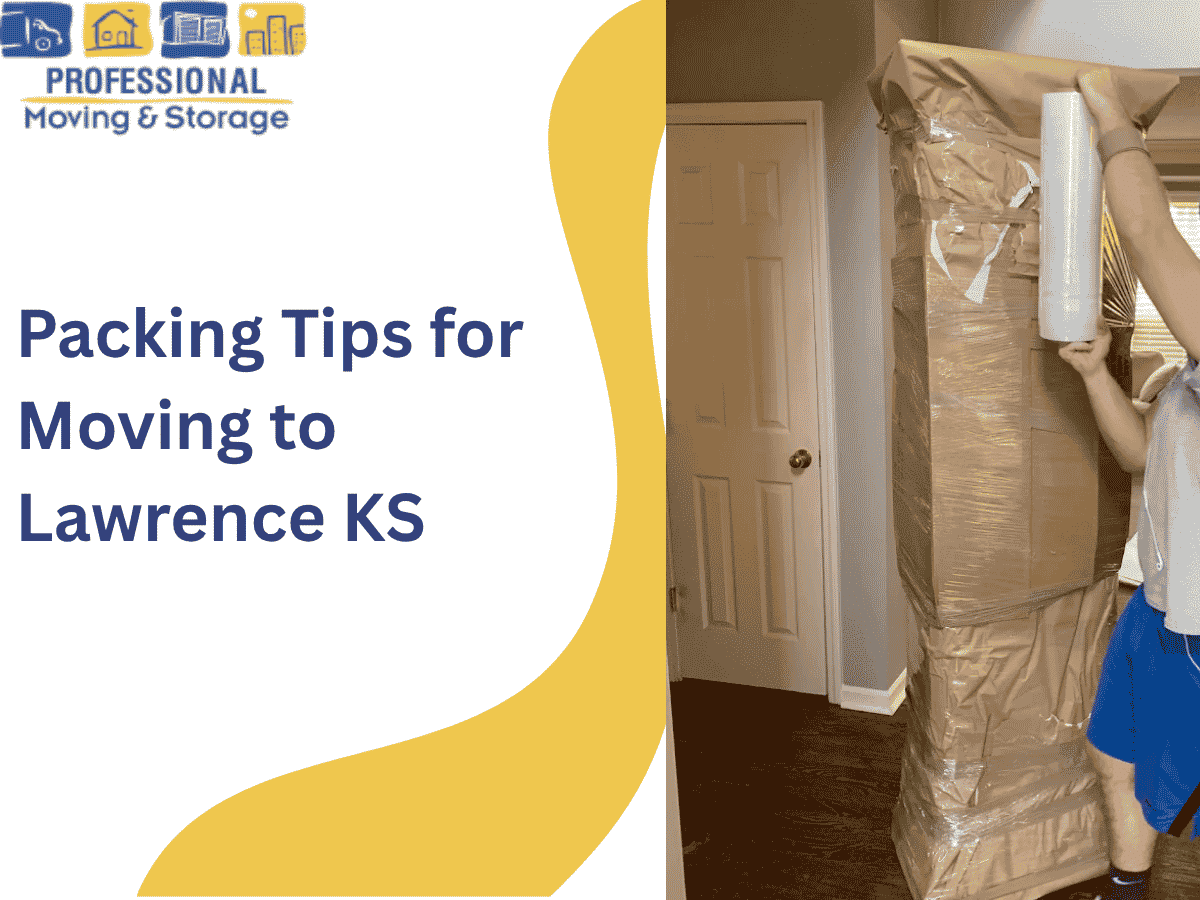
The team uses quality packing materials and carefully labels boxes by destination room to make unpacking easier at your new home. Every moving estimate also includes shrink wrap and moving blankets at no additional cost, helping protect furniture and other belongings throughout the move. Whether you need the entire home packed or just want professional help with the kitchen and fragile items, you can customize the service around your needs.
Frequently Asked Questions
When should I start packing for a move?
Start six weeks before move day with decluttering, then begin boxing low-use items around four weeks out. Waiting until the final week is the most common reason moves feel rushed and disorganized.
What should I pack first when moving?
Pack seasonal items, decor, books, storage bins, and anything in spare rooms or the basement first. These are things you will not miss for a few weeks, which keeps your home functional while you work.
How heavy should a moving box be?
Keep boxes under 50 pounds, and closer to 25 pounds for anything you will carry yourself. Overloaded boxes tear at the seams and are the leading cause of damaged contents.
Can I leave clothes in my dresser drawers?
Yes, folded clothing can usually stay in dresser drawers. Remove jewelry, breakables, liquids, and anything heavy, since the added weight makes the dresser harder to handle safely.
How do I pack a TV without the original box?
Wrap the screen in soft padding, add foam corner protectors, and place it in a reinforced box sized close to the unit. Always transport a television upright, because laying it flat risks cracking the panel.
What will movers not transport?
Movers cannot carry gasoline, propane, paint, aerosols, fertilizer, or other hazardous materials. Plan to dispose of these or transport plants, pets, and important documents in your own vehicle.
Is professional packing worth the cost in Lawrence?
It is worth it when you are short on time, moving during the busy August window, or transporting fragile and high-value items. Many Lawrence families choose partial packing for the kitchen and fragile pieces and handle the rest themselves.

About Professional Moving & StorageFounded in Lawrence by Bobby Jones in 2000. Our motto: "There is only one boss, the customer."