Most people think about storage as a short-term problem. The house sold faster than expected, the new place is not ready, and something has to go somewhere for six weeks. But a lot of Lenexa households end up keeping a unit far longer than they planned, and the ones who chose the right setup from the start are glad they did. The ones who grabbed the cheapest drive-up unit in July usually learn something about Kansas humidity by the following spring.
We have been storing furniture for Johnson County families for more than twenty years out of our Lenexa office on Bourgade Street. In that time we have seen what comes out of a storage unit in good shape and what does not. This guide covers when long-term storage actually makes sense, what it costs here, and how to choose a unit you will not regret in eighteen months.
When Long-Term Storage Earns Its Keep
Short-term storage solves a scheduling problem. Long-term storage solves a space problem, and those are different situations with different answers.
The closing dates do not line up. This is the classic one, and it is common in the Johnson County market where good listings move fast. You sell in three weeks and the build you are moving into is two months out. Storage bridges the gap without forcing you into a short-term rental.
You are downsizing and not ready to decide. Moving from a four-bedroom in Cedar Creek to a villa or a townhome means shedding a lot of square footage. Some of those decisions are easy. Others involve a grandmother's dining set and are not going to get made under a deadline. Storage buys you the time to decide properly rather than in a driveway on move day. Our guide to downsizing for a move covers how to work through that sorting.
You are staging the house to sell. Realtors will tell you to clear out roughly a third of your furniture before photos. Empty rooms photograph larger and buyers picture their own things in the space. That furniture has to live somewhere for the two or three months your house is on the market.
You are renovating. A kitchen remodel or a full floor refinish means the contents of several rooms need to be out of the way and out of the dust for months.
You travel, deploy, or work seasonally. Extended assignments, military orders, snowbird winters, and long international stints all create the same need: keep the household intact, just not in a house you are paying rent on.
Your business outgrew its space. Lenexa has a deep base of small businesses and light industrial operations, and inventory, records, trade show equipment, and seasonal stock all pile up. Storage is far cheaper per square foot than office or warehouse space. If you are also relocating the operation, our office moving tips cover the rest.
You are handling an estate. Sorting a parent's house is emotional work and it does not run on a schedule. Moving everything into one secure place lets the family work through it together over months instead of in one exhausting weekend.
What Storage Costs in Lenexa
Prices vary a lot depending on size, whether the unit is climate controlled, and how close it sits to the busier parts of town. Published averages range widely, so treat these as a starting point rather than a quote.
| Unit Size | Typical Monthly Rate | Holds Roughly |
|---|---|---|
| 5x5 | $20 to $30 | Boxes, seasonal decor, a few small items |
| 5x10 | $30 to $55 | Studio apartment, mattress set, boxes |
| 10x10 | $48 to $85 | One to two bedroom home |
| 10x15 | $85 to $130 | Two to three bedroom home |
| 10x20 | $130 to $200 | Three to four bedroom home, or a vehicle |
| 10x30 | $200 to $285 | Large home or business inventory |
RentCafe puts the average Lenexa storage unit at roughly $119 a month, with a 10x10 climate-controlled unit averaging around $84 and non-climate-controlled units averaging closer to $105. StorageCafe reports a similar citywide average near $118, with climate-controlled units ranging from about $21 for a 5x5 up to $283 for a 10x30.
The 10x10 is the most commonly rented size because it fits the contents of a one or two bedroom home, which covers most of the situations above.
Pro Tip From Our Crew
Ask about long-term rates before you sign anything. Many facilities discount multi-month commitments, and the advertised street rate is usually the first-month promotional price, not what you will pay in month seven. Confirm what the rate becomes after the introductory period ends.
Why Climate Control Matters More Here Than You Think
This is the decision that separates a good long-term storage experience from a bad one, and it is worth understanding before you save $20 a month.
Kansas puts belongings through a hard year. Summer brings heat near 90 degrees with real humidity, and a metal drive-up unit sitting in the sun runs considerably hotter than the air outside it. Winter drops well below freezing. The swing between those two extremes, repeated over months, is what causes damage.
What happens in an uncontrolled unit over a long stretch:
- Wood furniture expands and contracts with humidity swings, which loosens joints, cracks veneers, and warps table tops
- Upholstery and mattresses absorb moisture and grow mildew, which you will smell before you see
- Electronics suffer from condensation when temperatures swing, which corrodes internal components
- Photographs and documents curl, stick together, and fade
- Vinyl records and candles warp in summer heat
- Musical instruments are especially vulnerable, since wood and string tension both react to humidity. Our guide on preparing instruments for storage goes into the specifics
- Leather dries and cracks in winter, then grows mildew in summer
For a few weeks in spring or fall, a standard unit is usually fine. For a year holding a household's worth of furniture through a Kansas summer and winter, climate control is not an upgrade, it is the whole point. The price gap is often smaller than people assume, and in Lenexa climate-controlled units sometimes price below standard ones depending on the facility. Our full Lenexa weather guide covers what the seasons here actually do.
Full-Service Storage vs Renting Your Own Unit
These are two different products and people often compare them as if they were the same.
| Self-Storage Unit | Full-Service Storage | |
|---|---|---|
| Who moves the items | You, or movers you hire separately | Your moving crew, as part of the job |
| Access | Anytime, on your own | Scheduled through the company |
| Handling | You load and stack it | Professionally wrapped, padded, inventoried |
| Best for | Frequent access, ongoing needs | Between-homes gaps, long storage with no access |
| Truck rental | Usually separate | Included in the move |
Self-storage wins when you need to get at your things regularly, like a business pulling inventory weekly.
Full-service wins when the items are going away for a while and you want them handled once, correctly. Your crew wraps the furniture, loads it, and it stays wrapped until it comes out. Nothing gets moved twice by four different sets of hands, which is where most storage damage actually happens.
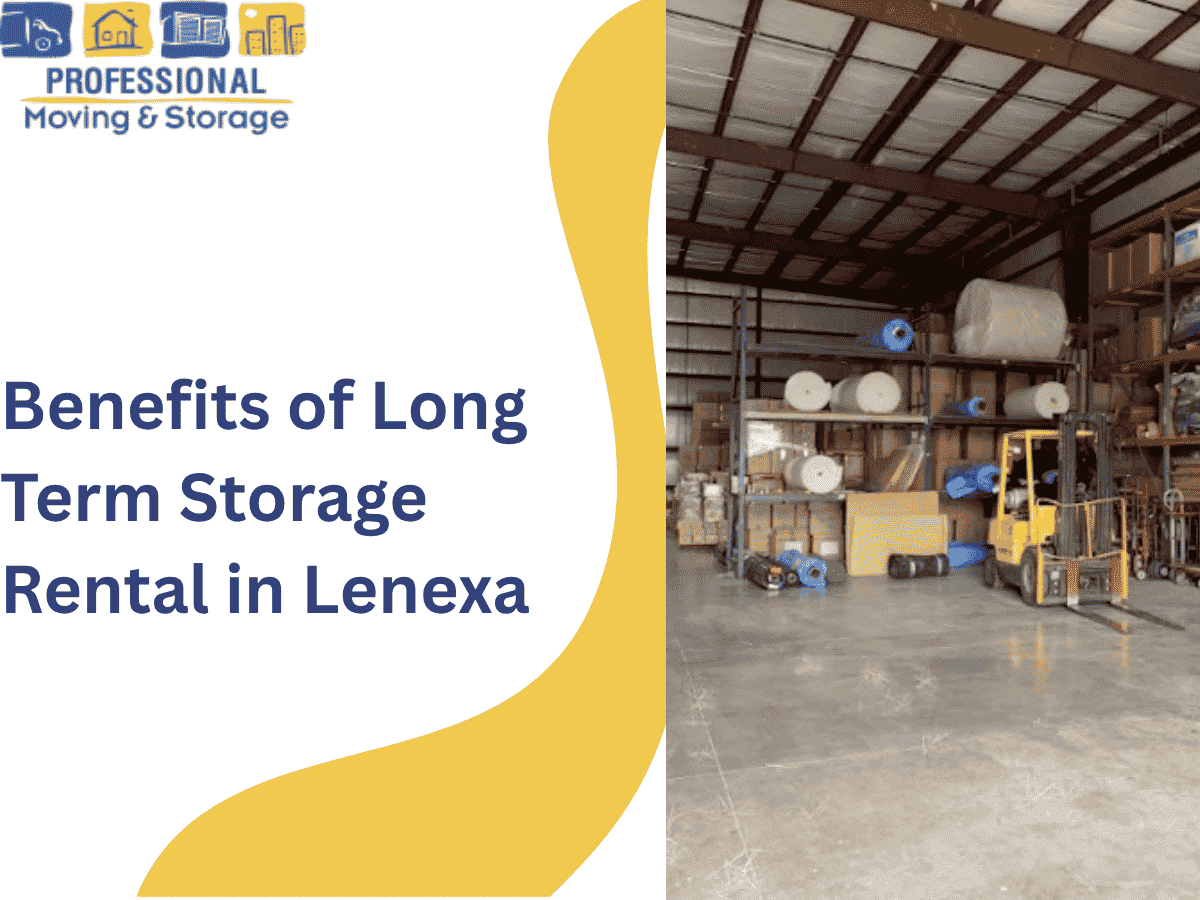
We keep clean, secure, climate-controlled storage and can fold it directly into the move, so you are not coordinating a truck rental, a storage contract, and a crew as three separate projects in the same week.
VIDEO QUOTE
Get a Fast Moving Quote
Show us your rooms on video and get an estimate based on size and distance. No in-home visit needed.
How to Pack for Long-Term Storage
Packing for a year is not the same as packing for a weekend. A few habits make an enormous difference when the doors open again.
- Clean everything first. Food residue attracts pests and stains set permanently over months.
- Make sure nothing goes in damp. A slightly damp rug will be a ruined rug by spring.
- Use uniform sturdy boxes, not grocery store castoffs. They stack squarely and hold their shape.
- Skip plastic bags and shrink wrap directly on furniture. They trap moisture. Use breathable furniture pads instead.
- Disassemble what you can and bag the hardware, taped to the underside of the piece it belongs to.
- Leave appliance doors propped open so they do not develop odor.
- Elevate everything off the concrete on pallets or boards, since concrete transfers moisture.
- Label every box on two sides and keep a simple inventory list on your phone.
- Leave an aisle if you will need access, and put anything you might want early near the front.
Pro Tip From Our Crew
Photograph the unit once it is loaded. It takes two minutes, documents condition, and saves an argument later if anything is ever in question.
What Not to Put in Storage
Most facilities prohibit these, and for good reason:
- Perishable food of any kind
- Flammables, propane tanks, gasoline, and paint
- Plants and anything living
- Firearms and ammunition, depending on the facility
- Cash, jewelry, and irreplaceable documents, which belong in a safe deposit box
- Anything with fuel in the tank, unless the facility is set up for vehicle storage
Choosing a Facility
Run through this before you sign:
- Climate control for anything staying longer than a season
- Security including gated access, surveillance, and good lighting
- Clean, dry, well-maintained buildings with no smell and no evidence of pests
- Ground-floor or elevator access if you plan to visit regularly
- Real rate transparency, meaning what you pay in month six, not just month one
- Insurance requirements, since many facilities require coverage and your homeowners policy may already extend to stored goods
- Contract terms, including notice required to move out and whether they prorate a partial month
Frequently Asked Questions
How much does long-term storage cost in Lenexa KS?
The citywide average runs roughly $118 to $119 a month across all sizes. A 10x10 unit, the most common size, typically falls between $48 and $85, with climate-controlled units averaging around $84.
Do I need climate-controlled storage in Kansas?
For anything stored longer than a few weeks, yes. Kansas summers bring heat and humidity while winters drop below freezing, and that repeated swing damages wood furniture, electronics, photos, upholstery, and instruments.
What size storage unit do I need?
A 10x10 holds a one to two bedroom home and is the most commonly rented size. A 10x15 fits two to three bedrooms, and a 10x20 handles a three to four bedroom house.
Is full-service storage better than a self-storage unit?
It depends on access. If you need to get at your belongings regularly, rent your own unit. If items are going away for months and you want them wrapped, handled once, and inventoried, full-service storage through your mover is usually the better result.
Can my moving company store my things between homes?
Yes. If your closing dates do not line up, your belongings can go from the old house into storage and out to the new one as part of the same job, which avoids loading and unloading them multiple times.
How long can I keep items in storage?
As long as you need. Most agreements run month to month, though many facilities discount longer commitments. Ask what the rate becomes after any introductory period.
Storage That Comes With the Move
Professional Moving & Storage has served Lenexa and the Johnson County area for more than twenty years. Our Lenexa moving company is family-owned, and we handle the move and the storage as one job so you are not managing three vendors during the busiest week of your year.
If you are still working out timing, our guides to moving costs in Lenexa and the best time to move will help you plan around it.

About Professional Moving & StorageFounded in Lawrence by Bobby Jones in 2000. Our motto: "There is only one boss, the customer."